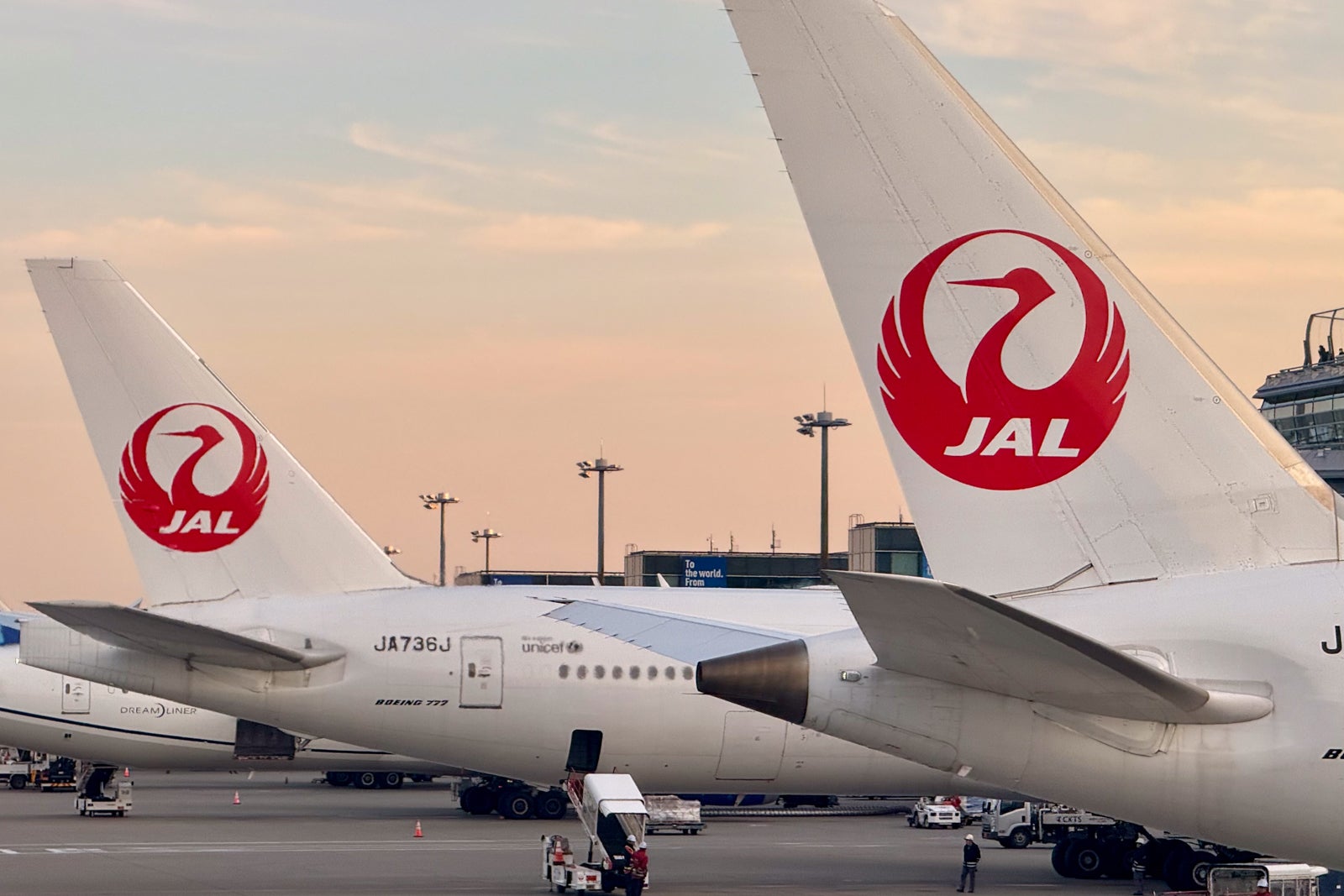

JSX CEO talks up ATRs, puts deposit on new hybrid turboprop
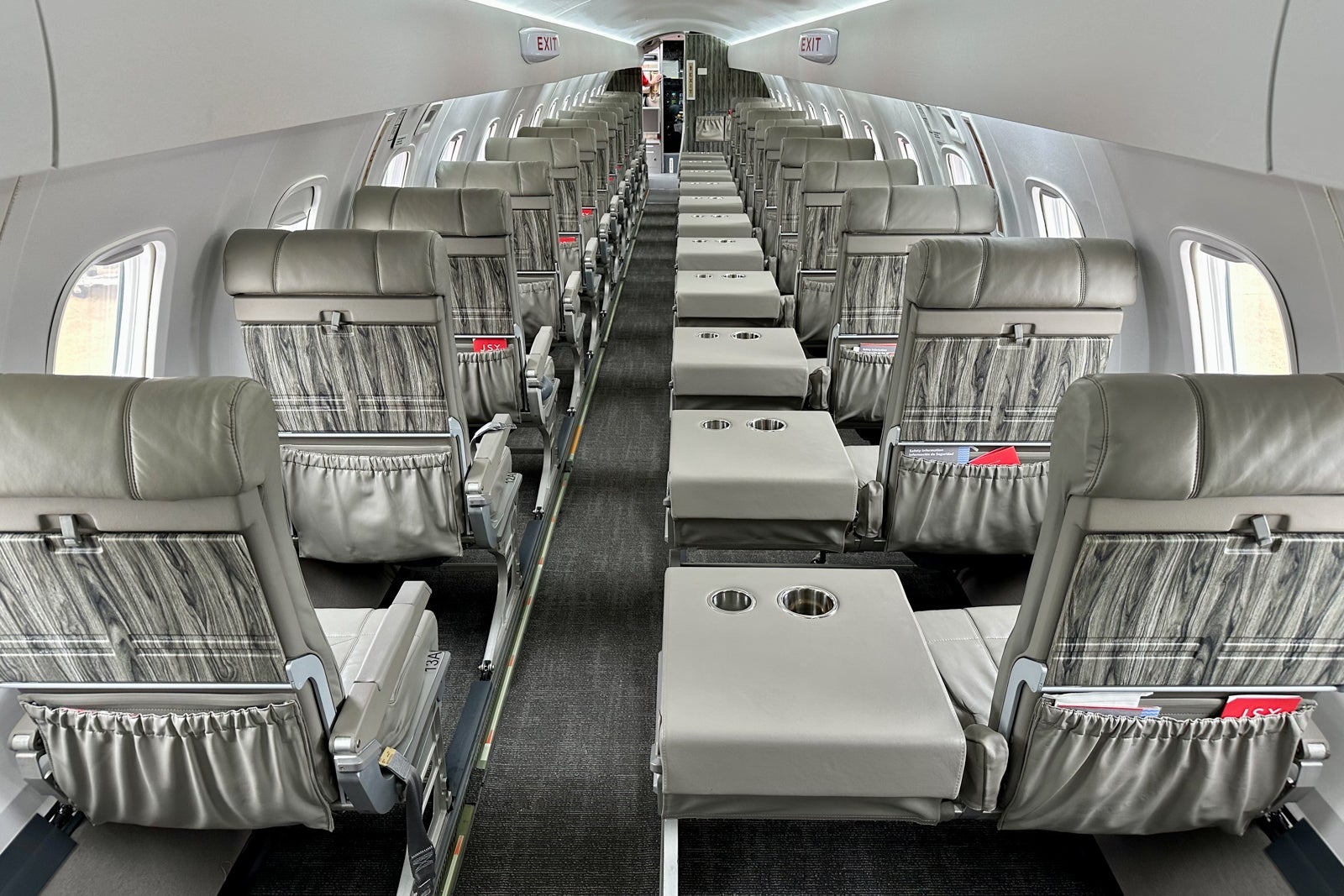
When boutique air carrier JSX debuted its first ATR turboprop in December, CEO Alex Wilcox was optimistic but skeptical.
JSX made its name selling upscale convenience: seating in a 1-1 configuration on most of its Embraer ERJ regional jets, with high-speed Starlink connectivity, flying from private air terminals at major airports or secondary airports in major cities.
Whether deserved or not, turboprops like the ATR carry a stigma in the U.S. that they are less comfortable than jets.
Nine months in, though, and Wilcox is happy with the results.
Club JSX: Earn rewards and fly in comfort with JSX’s new loyalty program
“People really love the airplane,” he said on the sidelines of the Regional Airline Association Leaders Conference in Washington, D.C., on Wednesday. “Once it works, people love it.”
A presentation by ATR at the same event estimated that the net promoter score — a measure of customer satisfaction — for JSX’s ATRs is 2.5 points higher than for its ERJs.
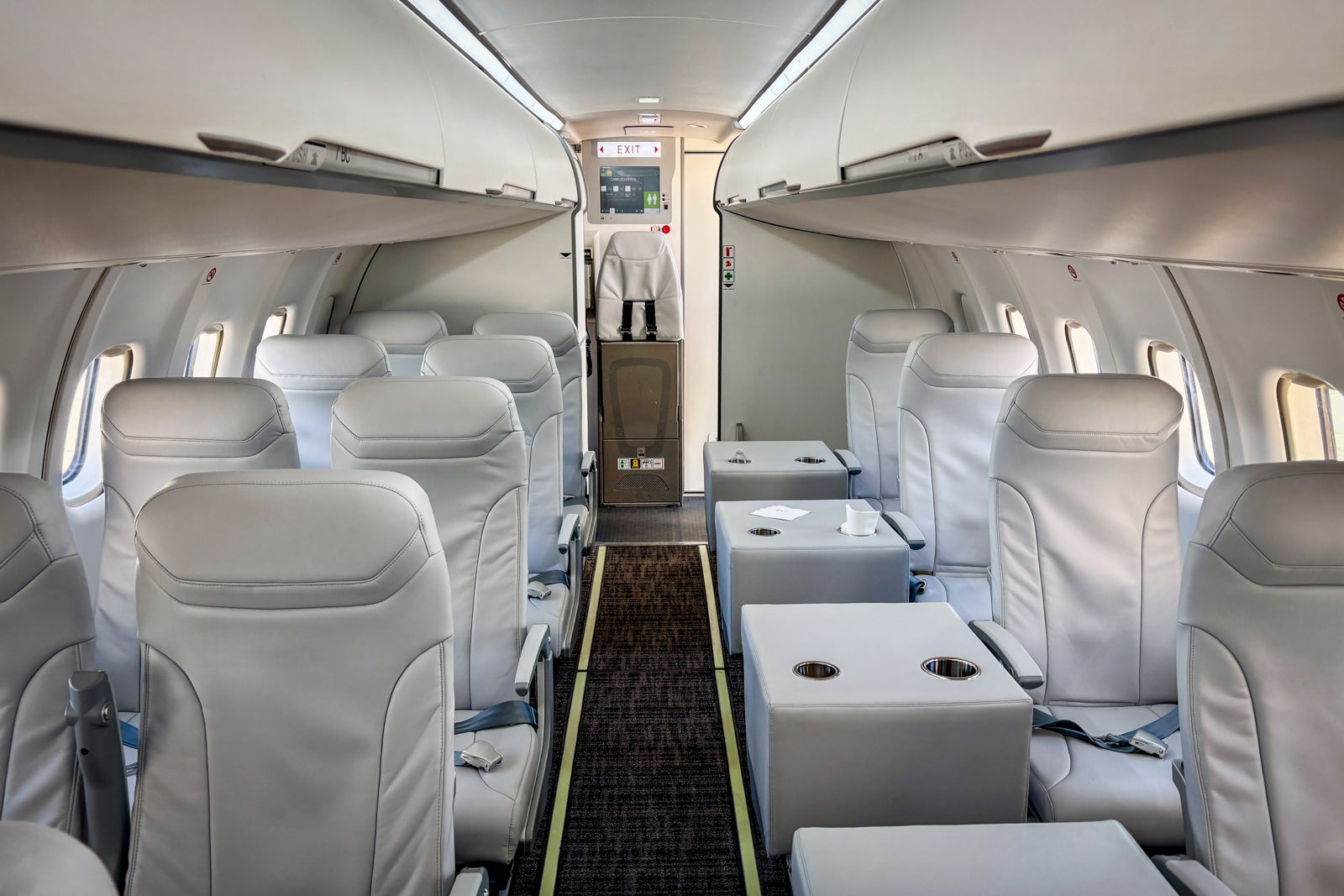
The “works” part is the challenge. Despite plans to have four ATR 42-600s configured with 30 seats in a 2-1 layout flying by summer, supply chain and maintenance issues slowed the rollout, Wilcox said.
JSX’s fourth ATR entered service on Aug. 30, data from flight tracking website FlightRadar24 shows.

Reward your inbox with the TPG Daily newsletter
Join over 700,000 readers for breaking news, in-depth guides and exclusive deals from TPG’s experts
Those delays forced JSX to push off plans for new mountain service to Telluride Regional Airport (TEX) in Colorado and, potentially, Truckee Tahoe Airport (TKF) in California until at least summer 2027, Wilcox said. Local restrictions on jet operations at both airports mean JSX can only serve them with turboprops like the ATRs.
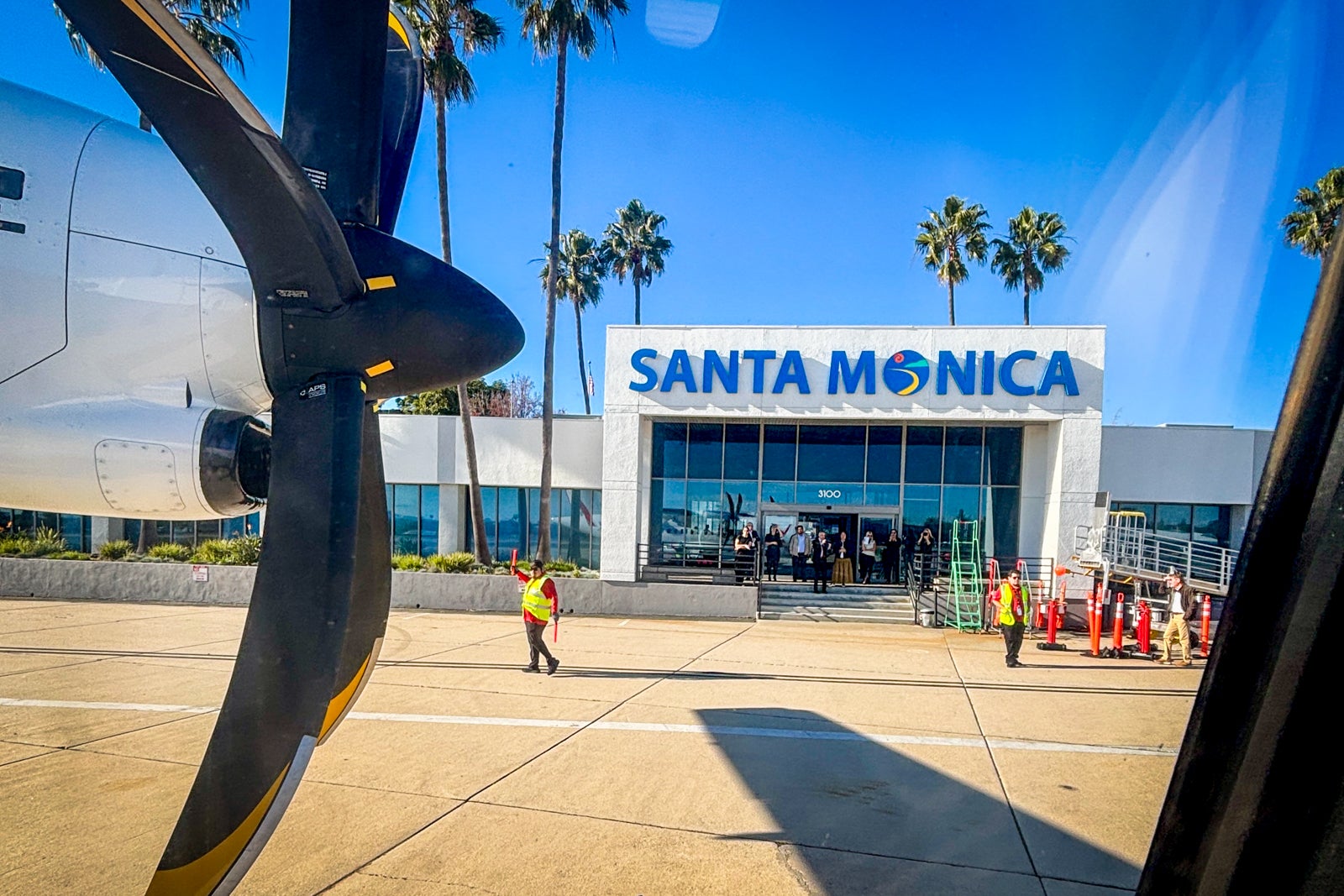
JSX currently flies its ATRs from the Santa Monica Airport (SMO) on the west side of Los Angeles to Harry Reid International Airport (LAS) in Las Vegas, Napa County Airport (APC), Scottsdale Airport (SCF) near Phoenix and, as of Sept. 14, Oakland San Francisco Bay Airport (OAK).
Members of the Club JSX loyalty program can earn and redeem points on all of the air carrier’s flights, including those flown with ATRs. United Airlines’ MileagePlus program members can also earn points on JSX flights and redeem them on select flights.
ATR versus ERJ
JSX began flying an ATR on one of its multiple daily flights between Hollywood Burbank Airport (BUR) and LAS on Sept. 14 in what Wilcox described as something of an A/B test to see how the turboprop performs against the air carrier’s Embraer jets.
“The NPS is high but is that Santa Monica or that the ATR?” he said. “We don’t know. Now we’re going to find that out. We’re going to put it into regular rotation where the jets go.”
SMO is a more convenient airport for much of Los Angeles’ west side compared to either Los Angeles International Airport (LAX) or BUR in the San Fernando Valley.
JSX’s website shows the BUR-LAS flight on the ATR scheduled at one hour and 20 minutes compared to the ERJ at one hour and 10 minutes.
FlightRadar24 data show the turboprop consistently takes about 10 minutes longer than the jet to complete the trip.
The results of the ATR versus Embraer test will inform JSX’s decision on whether or not to finalize a deal for up to 25 new ATR 42-600s from the manufacturer, Wilcox said. While he previously hoped to make a decision by the end of this year, he now anticipates one by the middle of 2027, citing the delays JSX experienced with its first four turboprops.
JSX’s future Heart
JSX is not putting all its eggs in the ATR basket. The air carrier on Wednesday put down a deposit for 50 of the planned hybrid-electric Heart Aerospace ES-36 turboprops.
If the plane achieves certification by 2031, as hoped, it would be the first entirely new turboprop in decades and one with operating expenses roughly 40% lower than those of fossil-fuel-powered planes.
“Someone needs to build it,” Wilcox said. “No one’s building 30- to 50-seat airplanes anymore other than ATR. For something that’s going to have 40% of the energy costs, it could fly all electric with zero emissions if you had the right solar infrastructure and everything else, I think that’s the future. It’s also more reliable.”
Asked how confident he is in Heart achieving its development target, he cited the company’s first flight of a demonstrator model in August as evidence that it was “more than a paper organization.”
“Seeing is believing,” Wilcox said.
The ES-36 will seat up to 36 passengers in a single-class layout, though JSX can only configure its planes with 30 seats under the public charter model it uses to operate its flights. The plane can fly up to 745 miles — far enough to fly nonstop from SMO to TEX.
JSX hopes to begin flying the ES-36 by the “early 2030s” if Heart is able to certify the plane in five years, said Wilcox.
Heart also has commitments for the ES-36 from Air Canada and United Airlines.
Related reading: